

Braces can fix an overbite without surgery in most mild and moderate cases, and even in many severe cases. They use gentle, steady pressure to gradually shift your teeth through the bone into their proper position. Surgery is typically important when your overbite comes from misaligned teeth or a genuine mismatch in jaw size.
Braces can do a lot to correct a true skeletal discrepancy. Adults choose braces to correct their overbite, use elastics, and sometimes wear a supporting appliance instead of jaw surgery. In this article, we will discuss how non-surgical correction works. We’ll also cover what makes some cases harder to treat and when surgery is the best option.
How Do Braces Correct an Overbite?
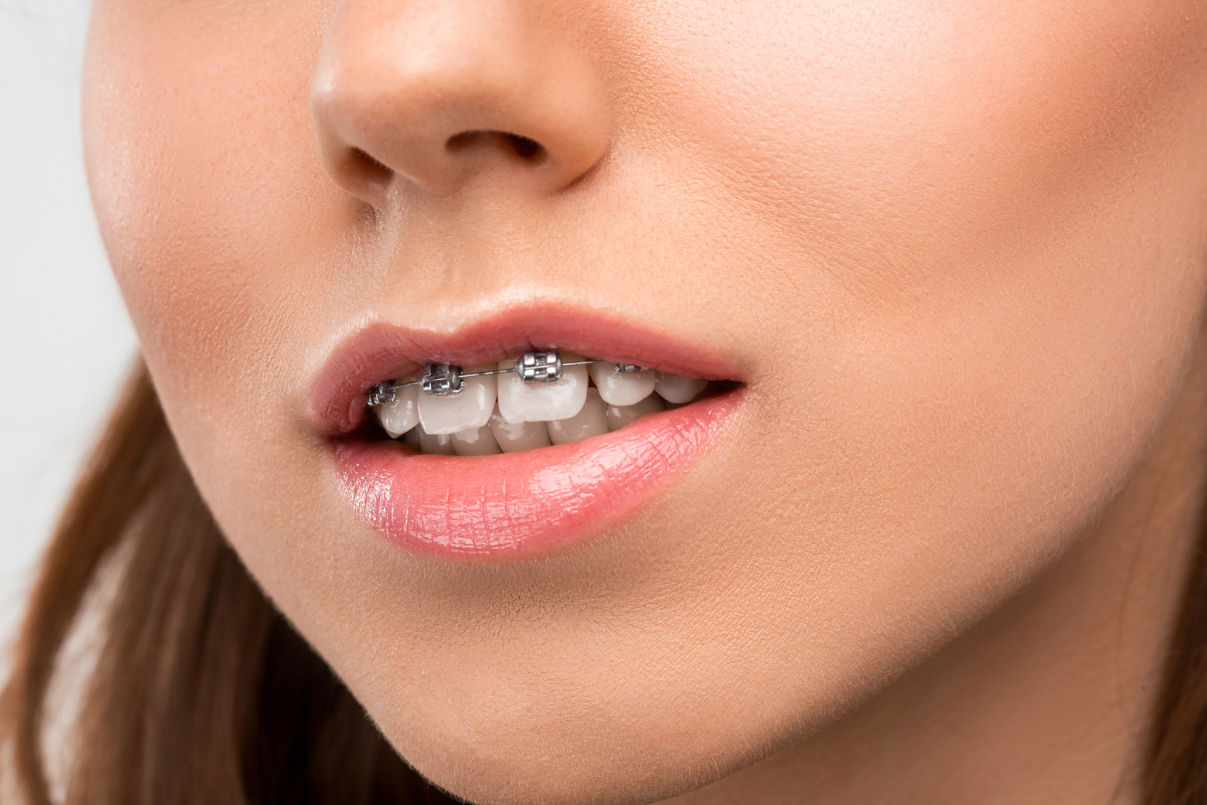
Braces apply steady pressure to your upper and lower teeth to gradually shift them into the correct position. Orthodontists often add rubber bands, also known as elastics. They have hooks between the upper and lower brackets to pull the upper teeth back while guiding the lower teeth forward.
For overbites, it’s more about jaw position than tooth position. Appliances include Herbst devices and Forsus springs that guide jaw growth in younger patients. Some crowded or severe cases benefit from removing a tooth or two to create the space needed to pull the front teeth backward non-surgically.
When Can an Overbite Be Treated Without Surgery?
You can treat an overbite without surgery when the cause is primarily dental rather than skeletal. This means the teeth are misaligned even though the upper and lower jaws are reasonably well matched in size. Dental overbites respond well to braces alone because moving teeth through the bone is exactly what braces are built to dobraces are built to move teeth through the bone.
The American Association of Orthodontists recommends a first orthodontic evaluation by age 7. Because catching a developing overbite early often means you can guide it into a better position non-surgically before the jaw finishes growing.
How Long Can Overbite Treatment Take?
Treatment length varies greatly by severity, with mild cases frequently completing within 12 to 18 months. More complicated cases involving functional appliances or extractions can take 24 months or longer. Younger patients whose jaws are still growing tend to see faster, more efficient correction.
Orthodontic appliances can work with natural growth against fully fused adult bone. Adults can still expect meaningful results, though treatment sometimes takes a bit longer. Because there is no active jaw growth to help guide the correction along the way.
Approach |
What It Involves |
Best For |
| Elastics with braces | Rubber bands pulling upper teeth back, lower teeth forward | Minor to moderate dental overbites |
| Functional appliances | Herbst devices, or Forsus springs, control jaw position | Growing children and teens |
| Tooth extraction | It removes one or two teeth to make space | Crowded or more severe dental cases |
| Orthognathic surgery | Surgical repositioning of the jaw | Serious skeletal mismatch in adults |
Can an Overbite Get Worse Without Treatment?
If you leave your overbite untreated, it can worsen. This is especially true in developing kids, whose jaws can gradually widen an existing mismatch between the upper and lower arches. If left untreated, a large overbite can also increase the risk of damage to erupting front teeth, cause uneven tooth wear, and cause discomfort in the jaw joint. Waiting doesn’t always complicate a case, but it eliminates the benefits of guiding a still-growing jaw. That is why orthodontists prefer to catch overbites early rather than wait until adulthood.
When Might Orthodontic Surgery Be Considered?
is necessary when an adult patient has a serious skeletal discrepancy that braces are unable to fix alone. Most frequently, this is because the lower jaw is greatly too small or recessed relative to the upper jaw. Because adults have fully attached jawbones, there is no active growth left to guide treatment. This limits how much tooth movement alone can fix a skeletal mismatch. Even so, many adults with complicated to borderline severe overbites still get outstanding outcomes without surgery. So a complete checkup is the best way to determine which category fits your case.
FAQs
Can braces fix an overbite completely?
Braces can fix your overbite on their own. Especially dental overbites and minor to major skeletal cases, though severe skeletal mismatches may still require surgery for a complete correction.
How long does it take to fix an overbite with braces?
Minor overbites frequently complete within 12 to 18 months. More complicated cases involving functional appliances or extractions can take 24 months or longer.
Can adults fix an overbite with braces?
Yes, many adults successfully correct their overbites with braces alone. However, treatment can take longer because there is no active jaw growth to support the process.
Is surgery always needed for a severe overbite?
No, it is not only for severe skeletal mismatches. Many complicated overbites still respond well to braces, elastics, and supporting appliances alone.
What happens if an overbite is not treated?
If you leave it untreated, it can worsen over time. Particularly in developing kids, it can cause uneven tooth wear, jaw discomfort, and a higher risk of injury to erupting teeth.
Bottom Line
Braces can fix an overbite without surgery in most minor, moderate, and even many complicated cases. Especially when the problem is dental instead of skeletal in origin. Elastics, functional appliances, and sometimes tooth extractions give orthodontists many non-surgical tools. Catching an overbite early gives young patients the added advantages of a still-growing jaw. Surgery is still an option for complicated skeletal mismatches in adults. But it is far from the default path for most patients.
At SmileCrew Orthodontics, we guide patients throughout Buda and Leander, Texas. We can also check whether your overbite is a candidate for non-surgical correction. Book your consultation with us today. Schedule a consultation to determine the best treatment options for your case.